

Meet Éowyn
breaker of rules

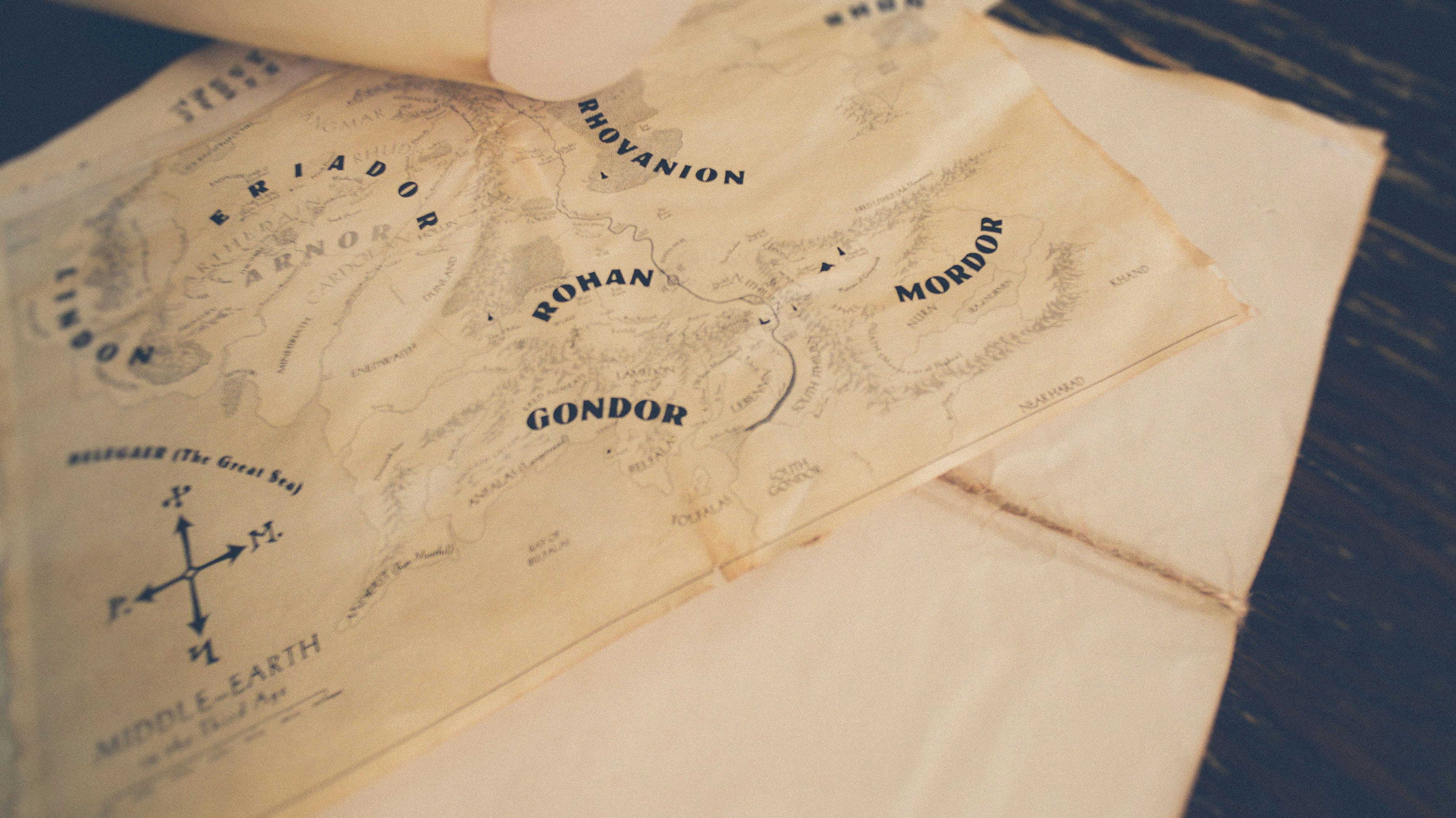
Lord of the Rings: The Return of the King was the first movie I can remember seeing in which the whole theater reacted along the way. Throughout the movie, the audience laughed, clapped, and cheered as our beloved characters made their way toward the gates of Mordor and the heart of Mount Doom. It was the first time I was aware of not just the movie but the people around me, the community of fans relishing the experience that stitched us together for two and a half hours.
One of our loudest cheers came the moment Éowyn of Rohan slays the Witch-king of Angmar.
If I may set the scene…
The Dark Lord, Sauron, threatens to conquer Middle Earth. The Witch-king is his second-in-command. He is empowered by the One Ring itself, but he doesn’t just have power on his side: He has prophecy. According to Tolkien’s lore, “no living man can hinder” the Witch-king.
So, when the Witch-king joins the battle against our heroes on the Fields of Pelannor, he does so confident in his invincibility, and he wreaks havoc.
In addition to slaying countless soldiers, the Witch-king bests Gandalf the White, the strongest magical being we’ve met so far in the series, and he topples King Théoden of Rohan. He seems unstoppable. He has no reason to worry when Éowyn, disguised as just another rider from Rohan, steps up to challenge him.
The beginning of their duel goes how you might expect. The Witch-king quickly gets the upper hand. In the movie version (2003), he shatters Éowyn’s shield, breaks her arm, and knocks her to the ground. Before finishing her off, the Witch-king lifts Éowyn–still disguised as a man–up by the throat and says in his ghastly voice: “You fool. No man can kill me.”
Just then, the hobbit Merry stabs the Witch-king from behind, creating an opportunity for Éowyn to strike back. Before she sticks a sword into the Witch-king’s face, though, she removes her helm, lets her strawberry-blond locks loose, and declares, “I am no man.”
Over two decades and probably a dozen watches later, the scene still makes me want to cheer.
A woman in a man’s world.
Éowyn is a woman in a man’s world. This is true on multiple levels:
Éowyn the character is a man’s creation. She is authored by JRR Tolkien and literally exists in his fictional world, Middle Earth. Within Middle Earth, Éowyn lives in a patriarchal society ruled by knights and kings. The role of women is to stay behind and wait for them to die.
In 2025, “I am no man” (or the book version, “No living man am I!”) might come across to some as a superficial moment of “girl power.” Indeed, the scene is a relatively brief nod to female agency in Tolkien’s otherwise male-dominated world.
But there’s something we can all glean from Éowyn beside her defiance of outdated gender roles. When I rewatch Éowyn declaring “I am no man” in March of 2025 (and then sticking her sword in the Witch-king’s face), what I hear her saying is, I operate outside of your rules.
The Witch-king’s Rules
When the Witch-king says “No man can kill me,” what he’s saying is there is a history and an elaborate system of power that makes him untouchable to anyone playing by the rules of that system. In other words, men.
Like the people making headlines in recent weeks, the most powerful players in Middle Earth are male: Sauron, the Witch-king, Gandalf, Aragorn, Théoden, and the soldiers loyal to them. All the rules and machinations of war–the rings with the power, the swords with the names–are set and executed by men. What the Witch-king and his evil boss have forgotten, however, is that some of the people they are trying to conquer play by a different set of rules: People like hobbits. And women.
Donald Trump, Elon Musk, and their supporters are playing by the Witch-king’s rules. With every moment of disregard for the laws and precedents of American democracy–and disregard for the humanity of others–they flaunt their power with the same terrifying skill as the Witch-king wields his great, iron flail. You fools, they are saying to us, No one can stop us. And like the Witch-king himself, they have a patriarchal history and a system of influence that makes them think they are untouchable. Empowered by belief in their own invincibility, they wreak havoc.
Éowyn’s Rules
Éowyn reminds us there will always be people who operate outside rules that create and perpetuate suffering. And for those of us who call ourselves Christians, we are called live as such people. We are called to exist in communities of radical love, to heal each other’s wounds and hold each other together, even those who look different than we do, speak different languages, believe different things, and live in different places.
Éowyn also reminds us just because we try to live outside of a certain power structure doesn’t mean we aren’t supposed to fight against it. Éowyn might exist outside the magic that gives the Witch-king his power, but that doesn’t make him any less of a threat to her, her family, and her kingdom.
Éowyn had a privileged position in the kingdom of Rohan, but she did not have a position of power. She is an example to all of us for whom it would be easy to hang back and wait for the shadow to reach us. She would have had a great hall to tend to and a warm fire in the hearth. All her society asked of her was to wait for the knights and kings to die, and she could have done just that.
Instead, she donned a helm that was not made for her to wear. She took up a sword and shield that were not made for her to wield. She grabbed a hobbit she was not meant to conspire with, and with him, she rode into battle.
Living by Éowyn’s Rules
I don’t know what it looks like for all of us to ride into battle right now. Honestly, I don’t know yet what it looks like for me.
But, a couple weeks ago, I was having lunch with a friend who shared that they had been looking for ways to push back against the forces at work in Washington. One of those efforts was an email they sent to a few friends with the simple subject line, “a few leads and links.” That email contained information about recent policy developments and resources for how to be in communication with our government officials.
It was a small gesture, but I was struck by the power of their example: When faced with a looming shadow, they took action that created connection. That email stitched people together, and when I heard about it, I said, “Could you add me to that list?”
Asking to receive an email is hardly the same as facing the Witch-king of Angmar. It’s certainly not the same as riding into battle (I pray we never face such a decision). But it is stitching myself to someone else with a common cause to resist injustice and, in a small way, maintain some solidarity with those who are suffering.
It is one way I’m trying, in this moment, to live by Éowyn’s rules.
P.S.
A bit of background on three things that influenced my choice to introduce you to Éowyn this week:
What Beyoncé and Taylor Swift can teach us about female mythology. This essay by Lane Anderson explores the imbalance of female and male voices in the art and politics we are exposed to in America, especially at this moment in time. Reading and reflecting on Anderson’s essay inspired me to focus on female influences in my own thinking and writing. Yes, Éowyn is a man’s creation, but her story stitched me to other female characters and writers across fantasy literature.
Why Religious Tools Don’t Work for Women. This essay by Celeste Davis introduced me to differences in masculine and feminine approaches to spiritual practice. Without giving too much of her thesis away, one of her main points is that “the divine feminine” stands up in the face of injustice. I think Éowyn embodies this notion.
Shannon K. Evans and her Substack, The Rewilded Life. I learned about both of the essays above because I follow Shannon Evans on Substack. You should too.